
Investors attribute the revival to the country's strong public markets, which are boosting confidence in initial public offering (IPO)-bound startups offering viable exit opportunities.

'The intensity and frequency of heatwaves will be much higher than in previous years over Punjab, Haryana, Rajasthan, Gujarat, Madhya Pradesh and Odisha.'

Invest with a 5 to 7 year horizon so that you are able to ride out price volatility and benefit from the long-term trends of demand and macroeconomic shifts.

The consumer durables segment declined by 23.4 per cent in June, as against a dip of 10.1 per cent a year ago.

Much of the discussion is happening at a "family level, not a corporate level". That means it is an Ambani or a Goenka in direct talks with Johar.

The April-June quarter (Q1) of the current financial year (FY25) may be soft for banks with loan growth moderation, net interest margin (NIM) pressures, and higher staff and credit costs inching up, according to analysts. Credit growth could ease due to the lagged impact of the Reserve Bank of India (RBI) tightening and deposit growth has weakened, and the current account and savings account (CASA) ratio has declined 10-370 basis points (bps) quarter-on-quarter (Q-o-Q) for many banks.

'During his stint as prime minister, he got 270 million people out of poverty.' 'This, according to the World Bank, is the fastest compression of poverty anywhere in the world.' Arvind Mayaram, the former finance secretary, recalls his encounters with Dr Manmohan Singh.

The Apple iPhone comprises 44 per cent of the global smartphone market's revenues and it is the second most-such device to be shipped after Samsung. More than half of smartphones used in the US are iPhones. More than 7 million iPhones are expected to be sold in India in 2022, extending the user base to 20 million, according to market research and analyst firm Techarc. Hence, the news about Apple scaling down its production target for iPhone 14 in India has made news.

Maruti Suzuki India (MSIL) does not anticipate growth in the small car segment because people continue to find these vehicles unaffordable, chairman R C Bhargava said on Wednesday. He said the market had clearly shifted towards the sport utility vehicle (SUV) segment and the company will go in the same direction. The domestic sales of utility vehicles jumped in India by 34.54 per cent to about 2 million units in FY23.

'India's economy faces further downside risks from sluggish private investment and rural demand weakened by slow wage growth.'

Retail sales of automobiles in the domestic market saw a 7.73 per cent year-on-year decline in October this year at 21,17,596 units, mainly due to dip in two-wheeler uptake with the inauspicious period of Shraddh affecting new purchases, the Federation of Automobile Dealers Associations (FADA) said on Monday. Retail sales of automobiles in the domestic market stood at 22,95,099 units in October 2022, FADA said in a statement. Two-wheeler retail sales were at 15,07,756 units last month, as against 17,25,043 units in the year-ago period, down 12.60 per cent, as per the latest data by FADA.

Industrial production grew by just 1.8 per cent year-on-year in December 2011 due to contraction in mining and capital goods sectors and a lower manufacturing sector growth.

Cement manufacturers have hiked prices after a challenging Q1FY25, and Q2FY25 (so far) when general elections and seasonal factors cut down on construction activity. The August prices are currently around 3-6 per cent above July 2024 but may not be sustainable in the face of weak demand. H2FY25 may see realisation growth which, if it happens, would drive average operating profit/tonne improvements in H2FY25 over a muted H1FY25.

Retail investors have become a force to reckon with in the last 10 years with their ownership of Indian equities rising 800 basis points, or 8 per cent, to 23.4 per cent during this period, suggests a recent note from Morgan Stanley. This number, Morgan Stanley said, is set to rise in the next few years as Indian households are still underinvested in equities. India's demographics, policy framework, investor education and modest positive real rates, it said, will fuel the 'equity cult' in India.

Fast-moving consumer goods (FMCG) companies anticipate sustained volume pressures in the January-March quarter (Q4) coupled with sluggish rural growth during the period. Brokerages estimate top-line growth to be in low single digits in the quarter. Also, the late onset of winter had an impact on demand for winter products which range from moisturisers to hot beverages.

'Retail investors, who had not seen such a massive correction in the SMID universe since COVID-19, are witnessing something like this for the first time. Panic profit booking may continue.'

Benchmark indices settled lower on Friday, with the Sensex declining 111 points on the back of a sharp fall in index heavyweight Reliance Industries. The BSE benchmark went lower by 111.01 points or 0.21 per cent to settle at 52,907.93. During the day, it tanked 924.69 points or 1.74 per cent to 52,094.25. The NSE Nifty dipped 28.20 points or 0.18 per cent to close at 15,752.05.

The RBI has targeted consumer price inflation at 6 per cent by January and 4 per cent by March 2018.

Maruti Suzuki, Tata Motors, Mahindra & Mahindra, Hyundai and MG Motors are gearing up to introduce EVs in India.

What was once a solemn Vedic ritual is today a celebration for the entire extended family. And why not? With families living in distant cities, even continents, weddings are seen as an occasion for cousins and uncles to congregate under one roof for two or three days, observes Ambi Parmeswaran.

Shares of Mukesh Ambani-owned Reliance Industries Limited (RIL) rose nearly 1 per cent on Tuesday, hitting an intraday high of Rs 2,986.05 per share, after most brokerages reacted positively to the company's March quarter (Q4FY24) results. The bullish outlook stems from Reliance Jio's potential tariff hikes, given the competitive landscape, along with slow but steady improvement in the oil-to-chemical (O2C) vertical.

We no longer have the ambition to rival China save through words. We are happy to be fighting ourselves and digging up disputes from centuries ago as a substitute for real development, argues Aakar Patel.

'The slide in growth has arisen primarily because we have an NBFC crisis on top of a banking crisis,' points out T T Ram Mohan.
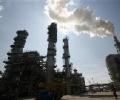
Industrial growth slowed to 3.6 per cent in February, 2011, compared to 15.1 per cent expansion in the year-ago period, dragged down by poor performance of manufacturing and mining sectors.

India's service sector proportionately much larger than China's, while its investment and industrial-production shares are much lower

With the rush of growth after the pandemic slowing down, many leaders are moving to firms that may be smaller but are growing much faster and have the headroom to grow.

The ongoing key reforms such as sops for manufacturing, easier labour laws, wooing FDI inflows and privatisation will help improve productivity and support long-term growth at 7.5-8 per cent levels, which if played out well, can help India contribute 15 per cent of global GDP growth by FY2026, says a report. According to a report pencilled by the India economist at UBS Securities, Tanvee Gupta Jain, the country has the lowest manufacturing costs among peers, even though China retains significant ecosystem advantages and despite that India and Vietnam appear most likely to benefit from a shift out of China.

Increased production of pulses, oilseeds, and cereals will help boost domestic supplies and contribute to keeping inflation low in the coming months.

Even though Bharat Forge's performance in the July-September quarter broadly met Street estimates and defence orders are on the rise, the subdued outlook for its global business has prompted some brokerages to adopt a cautious stance on the company. Analysts have reduced the company's earnings per share (EPS) estimates to account for the slow recovery of its overseas subsidiaries. Valuations are also trading at long-term averages, which could limit potential upsides.
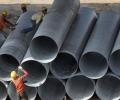
The festive season will mean business for the steel industry as it is the time when automotive and consumer appliance companies bump up demand to prepare for higher sales, experts have said. Ranjan Dhar, chief marketing officer at ArcelorMittal Nippon Steel India (AM/NS India), said that bookings by auto and consumer appliance industries are 20 per cent higher ahead of the festive season compared to last year. "While this could be for a couple of months, it could normalise later at approximately 10 per cent," he said.

For over a decade, HDFC Bank consistently outperformed industry growth rates in both deposits and advances, maintaining impeccable asset quality. Amid a landscape where other banks struggled with soaring non-performing assets (NPAs), HDFC Bank thrived, eventually surpassing ICICI Bank to become the largest private sector lender in India. Its net interest margin (NIM) remained stable in the range of 4.1-4.4 per cent.

'China is somewhat disappointing in its recovery, and slow growth, and India is reporting strong growth numbers.'
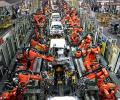
India's economy grew 6.1 per cent in the fourth quarter of 2022-23, pushing up the annual growth rate to 7.2 per cent, official data showed on Wednesday.

The economy may grow by around 7 per cent this financial year as estimated by the Monetary Policy Committee (MPC) of the Reserve Bank of India (RBI), say economists with various organisations. The first advance estimates for 2023-24 will be released on Friday by the National Statistical Organisation (NSO), an exercise done for calculating ratios such as the fiscal deficit. The interim Budget will be presented on February 1.

Steel companies are witnessing margin pressures in Q2FY25 and this may persist until China sees growth recovery.

Berger Paints, the country's second-largest decorative paint maker, continued to outperform its peers and gain market share in the 2023-24 (FY24) October-December quarter (third quarter, or Q3). The company posted a consolidated revenue growth of 7 per cent compared to the year-ago quarter, surpassing Asian Paints (5.4 per cent) and Kansai Nerolac Paints (5.7 per cent).

The Ficci survey, which covered 276 units, also revealed that those expecting a fall in their production decreased to 16 per cent in the second quarter from 26 per cent in the first quarter.

The industrial production index, which contracted by 0.4 per cent in October for the first time in 15 years, will continue to show a slowing trend till the end of 2009 with some chance of recovery later, feel economists.

The first quarter results (Q1FY25) of Indian IT services hint towards better fiscal growth than the preceding year, but as the management commentary said, "there is still some time for the industry to be firing on all cylinders." Among the majors-Tata Consultancy Services (TCS), Infosys, HCLTech, and Wipro-it is the Bengaluru-based Infosys that has performed better, which was also evident in its full-year revenue guidance.

The government's programmes should be expected to generate some momentum, but the macro-economic numbers are not encouraging, observes T N Ninan.
